Science News
 American
Science News for 31 March 2015
American
Science News for 31 March 2015
Photon 'afterglow' could transmit information without transmitting energy
Phys.org - 31 Mar 2015 15:20 (Phys.org)--Physicists have theoretically shown that it is possible to transmit information from one location to another without transmitting energy. Instead of using real photons, which always carry energy, the techniqu...
How Many Americans Could Get Ebola? Study Provides Estimates
Live Science - 31 Mar 2015 03:51 The U.S. could have seen more than a dozen Ebola cases monthly during the height of the epidemic last year, according to a new study.
Tampons Can Screen for Leaking Sewage
Live Science - 31 Mar 2015 02:15 Ordinary tampons can detect sewage pollution, a new study shows.
AI interns: Software already taking jobs from humans
New Scientist - 31 Mar 2015 23:00
People have talked about robots taking our jobs for ages. Problem is, they already have - we just didn't notice
To What Extent Should Organisms Be Collected from the Wild?
KQED Quest - 31 Mar 2015 22:44 From KQED Education Do Now: For centuries, museums and scientists have been collecting animals, plants and other organisms from the wild for research purposes. To what extent do you think collecting living and nonliving ...
Skin tough
e! Science News - 31 Mar 2015 22:34
When weighing the pluses and minuses of your skin add this to the plus column: Your skin -- like that of all vertebrates -- is remarkably resistant to tearing. Now, a collaboration of researchers at the U.S. Department o...
Zombie Cyborg Wood May Lead to Better Night-Vision Cameras
Live Science - 31 Mar 2015 22:16 The cyberwood, which continues to work even after its living components die, is made from a combination of tobacco plant and teensy carbon tubes. The result could lead to better technologies in night-vision cameras and t...
New Map of Global Ocean Temperatures Is a Work of Art
Live Science - 31 Mar 2015 22:10 A new global map of water surface temperatures is so visually stunning that it easily may be mistaken for art.
Fire ants kill and eat baby caimans as they hatch
New Scientist - 31 Mar 2015 22:00
Tiny insects can overcome young crocodilians in Argentina – and the invasive ants could be an even bigger threat to turtles, birds and deer in the US
The moon's got two tails - and its friends might too
New Scientist - 31 Mar 2015 20:00
The man in the moon wears a tailcoat. The discovery of a second stream of particles from the moon's dark side suggests a way to probe alien worlds from afar
Magnets Make Invasive Surgery Less So | Video
Live Science - 31 Mar 2015 19:59 Warning: Graphic Images. Using magnets outside the patient's body, surgeons can guide small devices within the abdomen thanks to a team of mechanical engineers from Vanderbilt University.
Dead Birds Call Out Ecosystem Issues | Video
Live Science - 31 Mar 2015 19:58 Wonder why you should spend a glorious day in the summer or a cold, windy day in the winter collecting beach-cast seabird carcasses for a citizen science group?
Seahorse reveals secrets of paradoxical grasping tail
New Scientist - 31 Mar 2015 19:30
See how 3D reconstructions are giving insight into the origins of the seahorse tail, which is rigid yet flexible
Is this ET? Mystery of strange radio bursts from space
New Scientist - 31 Mar 2015 19:00
Mysterious radio wave flashes from far outside the galaxy are proving tough for astronomers to explain. Is it pulsars? A spy satellite? Or an alien message?
Sunset Crater: Spectacular Photos of a Cinder Cone Volcano
Live Science - 31 Mar 2015 18:51 Sunset Crater, located in north-central Arizona, is the youngest volcano found on the 130,000-square-mile (337,000 square kilometers) Colorado Plateau. Check out these stunning images of an iconic geological feature in t...
Soft, energy-efficient robotic wings
Phys.org - 31 Mar 2015 18:45 Dielectric elastomers are novel materials for making actuators or motors with soft and lightweight properties that can undergo large active deformations with high-energy conversion efficiencies. This has made dielectric ...
How Long Would It Take to Fall Through the Earth?
Live Science - 31 Mar 2015 17:28 Past calculations made an assumption about Earth's layers that doesn't hold up, meaning if a person dug a tunnel through the planet, they could fall through to the other side quickly, though they could get sucked back in...
Cake Icing and Climbing Ropes: the Physics of Curling Threads
Physics Buzz - 31 Mar 2015 17:28
A stream of honey on toast, a line of cake icing, and a cascading climbing rope all produce similar curlicues and coils as they fall. More than merely decorative, these curls are used to make nonwoven fabrics such as fe...
LHC restart back on track
Symmetry Magazine - 31 Mar 2015 17:23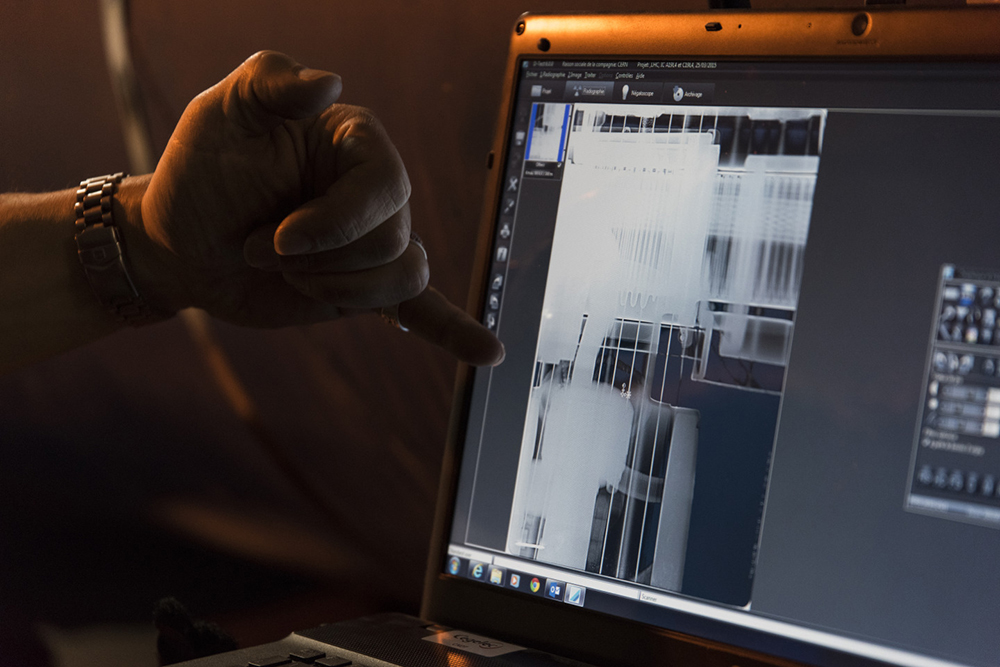 The Large Hadron Collider has overcome a technical hurdle and could restart as early as next week. On Monday, teams working on the Large Hadron Collider resolved a problem that had been delaying the restart of the accele...
Guess Your Age? 3D Facial Scan Beats Doctor's Exam
Live Science - 31 Mar 2015 17:16 It's no secret that we get more wrinkles on our faces as we age. But now, researchers have developed a 3D analysis of the face that can guess your age within a few years, based on your face alone.
Goodbye, range anxiety? Electric vehicles may be more useful than previously thought
e! Science News - 31 Mar 2015 17:10
In the first study of its kind, scientists at the Department of Energy's Lawrence Berkeley National Laboratory (Berkeley Lab) quantitatively show that electric vehicles (EVs) will meet the daily travel needs of drivers l...
Why We Need Local Economies to Balance Technological Unemployment
Singularity Hub - 31 Mar 2015 17:00 Exponential technologies and digitization lure our focus to global markets, dangling the potential of massive profits and dizzying scale. Entrepreneurs and investors look for opportunities to create the next platform,......
 Global
 Great Britain
 Indian
 South Africa